Saturday, March 30, 2019

Brank

Locomotive Audio makes stuff like variable-mu compressors.
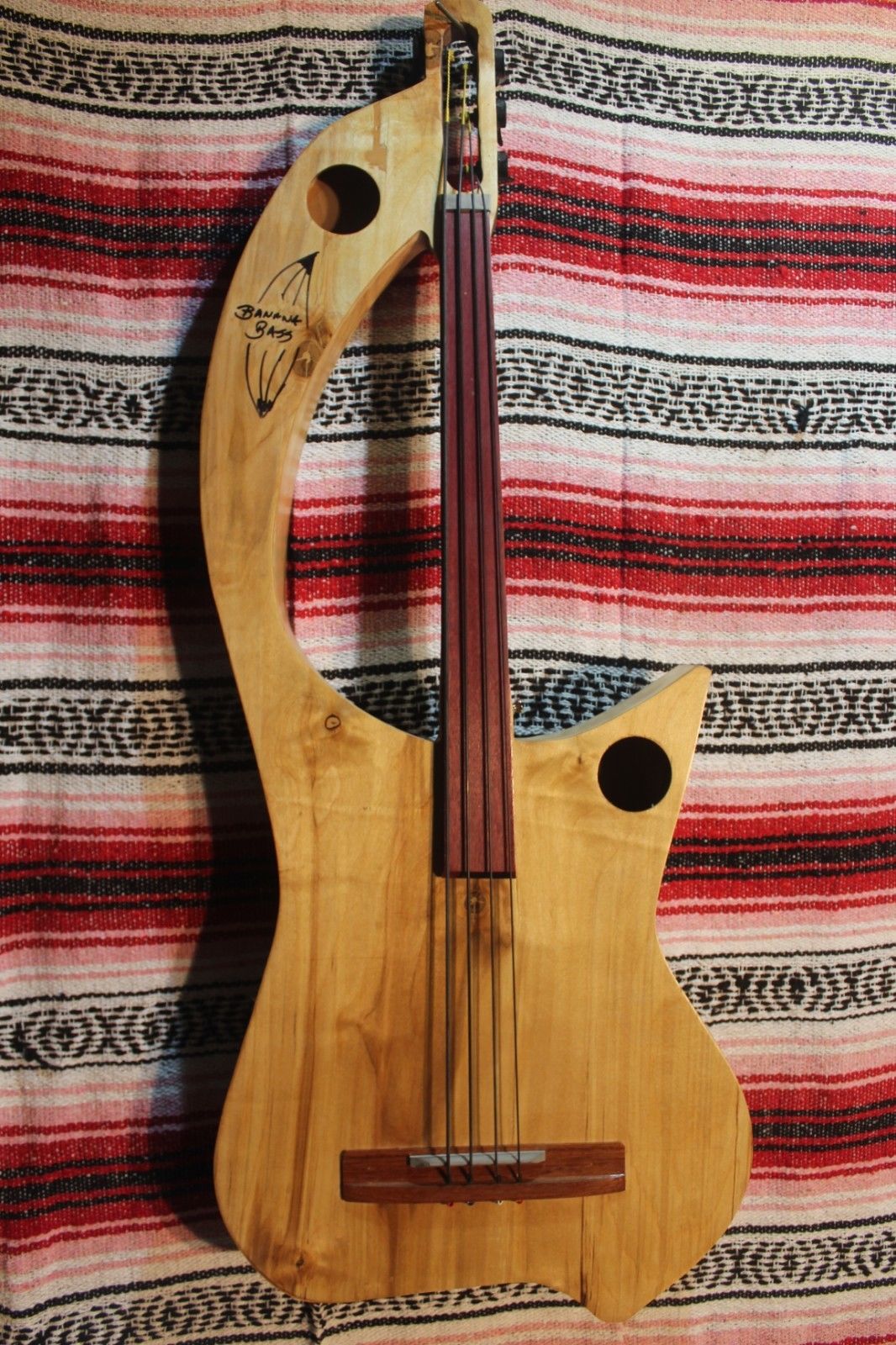
This is a bass kit from thefretwire.com. It's no longer available. 

Naiant is cool.

Music and money and where it goes.

Adafruit omnidirectional mic element.

Rare Winds wind library.

Soothe is a plugin that is relevant to my interests. I tried to tell my audiologist that I was really annoyed by 2.6kHz. She, uh, wasn't interested. I noticed that some of the Greg Calbi presets in Ozone had some notches built into them, so maybe this issue with obnoxious resonances ain't just me.


Tuesday, March 5, 2019

The stuff of my tabs is now the stuff of this post

Speaker kits.

Low-budget indy UK werewolf picture Howl.

Bodyguard series.

Overlord is a Nazi zombie picture.

Mixcraft seems like a kind of cool DAW.

Sound effects for How to Train Your Dragon.

Auphonic will loudness-normalize your podcast or what-have-you for free (up to 2 hours a month).

University of Bristol.


Monday, February 18, 2019

Mod Bass (kit)

There's a bunch more images here.
Me, yabbering about the bass on the 'tube is here.
Me, playing it very badly, here.


Lutyens


This cracks me up:

Lutyens recounts visiting old friends at a local communist office in Newcastle, who expressed interest in her mining-disaster dramatic scene The Pit (Op. 14, 1947), and suggested they play it at local pit welfare halls. When Lutyens warned they might not appreciate the ‘modern music’, an ex-miner present asked: ‘don’t you think that after two hundred years of capitalist ownership we could stand twenty minutes ‘modern music’?’

That's from this blog. Also, apparently, neither Lutyens nor any other woman, was allowed to teach composition at the Royal Academy of Music. Because. You know. Reasons.

Humble Bumble is cool. And so is Subnautica: Below Zero.


Saturday, February 16, 2019

The most vital needs for you today

Have I reminded ye of A1TriggerGate? Free. Stutter-y edit thingy. It's nice.
Places to download legal and free books.

Wavreport is a good site for stuff about production sound.
Lawson Horns. French horns.
Medlin Horns. North Carolina.

Wednesday, January 23, 2019

Wiggle

Cantabile is a VST host for live performance.

Olympic Musical Instruments makes hurdy gurdys.

Terry Britton on MIDI controlling Samplitude.
The traditional sequence of symbols is *, †, ‡, §, ‖, and ¶

Sunday, January 13, 2019

Okay. Do it again.

Sustaniac.
Rich's recommended strings for Stratocasters.
Inspiration 
Stew Mac on cutting inlays.
Squire Classic Vibe Telecaster with Alnico III's is $400.
The Banana Bass

The Art of Story YouTube classes.
Mike Verta Master Classes.
David Denyer Music.
Footnotes -- outside punctuation.
Thomastik Infeld guitar strings.
If you are insane you can try to find the measurements for fanned frets with this online fretfind tool.

Tuesday, January 8, 2019

specs

I do so love these kinds of body shapes.
Thoughts: 9-string guitar. Fanned frets. Scale lengths... I dunno. 33 1/4 inches to 24.75" maybe?
Top six are tuned like a guitar: E-A-D-G-B-E. Bottom three are like a 5-string bass: B-E-A.

Specs for 4001 Rickenbacker


Body Type Solid
No. Frets 20
Scale Length 84.5 cm (33 1/4'')
[b]Neck Width at Nut 41.3 mm (1 5/8'')
Neck Width at 12th Fret 52.4 mm (2 1/16'')[/b]
Crown Radius 25.4 cm (10'')
Body Wood Maple
Neck Wood Maple
Fingerboard Wood Rosewood
Weight 4.5 kg (10.0 lbs.)
Overall Length 114.5 cm (45 1/16'')

Overall Width 33.7 cm (13 1/4'')
Overall Depth 31.8 mm (1 1/4'')
Neck Binding No
Fret Marker Style Dot


Martin acoustics:

Standard Series 1 11/16", Low Profile since the early 90's, 2012 and later D-18 is an exception

Vintage Series 1 11/16", Mod V shape always, HD-28LSV was an exception at 1 3/4"

GE/Marquis Series 1 3/4", Mod V shape always, no exceptions that I can recall right now

Authentic Series 1 7/8", 1 3/4", or 1 11/16" depending on which year the guitar is based, mostly larger profiles with subtle or no V-shape


Also remember that bridge spacing typically changes along with the nut size. Normal pairings are 1 11/16" with 2 1/8", 1 3/4" with 2 5/16", and 1 7/8" with 2 3/8". There are some exceptions.


Most seven- and eight-string guitars also have a larger, flatter radius than a standard six-string guitar. While a vintage Tele’s 7.25-inch radius may seem perfectly fine (especially if you just play open cowboy chords on the lower frets), on a wider seven- or eight-string neck it will seem absurdly rounded. On a wider neck, even a 12-inch radius will have noticeable curvature.


Superscripts go outside of punctuation.

Choose your two scales (get the fret placement from a fret calculator like the one at http://www.stewmac.com/FretCalculator, or you can calculate it yourself too.), and decide which fret will be your perpendicular fret. I like fret seven most of the time but it depends on the scales you use.

Then lay out your frets from your perpendicular fret, but be sure to lay them out along the string center lines for the high and low E (not the edges of the fingerboard). Remember to factor in your bridge offset too when placing it and you are done. Then it’s a matter of very patiently and accurately sawing each fret by hand.


Neo-Reimannian theory is more complicated than I'd hoped.


Moving the Blags

I'm re-consolodating my blogs.  I know, you wanted them separate. But my little mind just doesn't work that way. All my blogging -- ...